Communicating creatively about climate sparks action
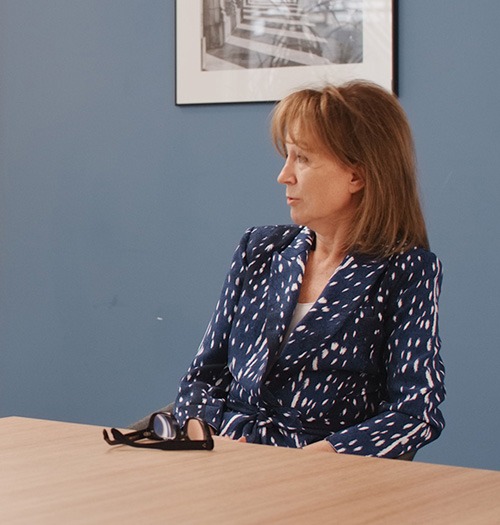
“Climate impacts are going to become increasingly obvious,” says Rita Clifton CBE, Portfolio Chair and Non-executive Director. “Even if people have been going around with blindfolds on, these issues are going to become more obvious. The world needs change. Business runs the world, so we need to change business.”
She continues: “And the way we need to change business right now is to make sure it's fully engaged around this agenda. If we don't get environmental and sustainability issues sorted out, there won't be any other issues to worry about. That’s quite a sobering thought for us all, both as human beings and as board directors.”
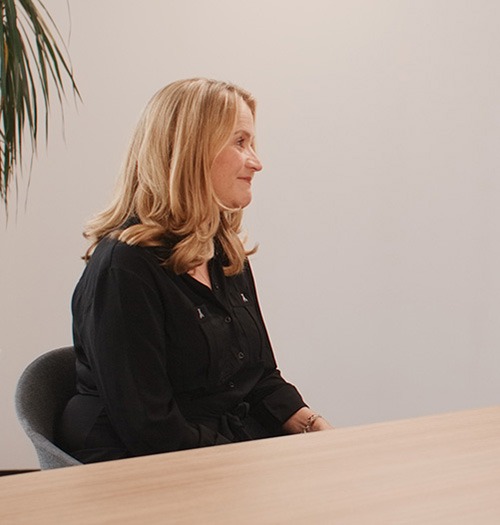
Vicky Moffatt, CEO of Chapter Zero, points out: “Reason leads to conclusions and emotion leads to action,” quoting neurologist Donald Calne. She adds: “Chapter Zero members are asking us about the headwinds. Where are we with action on climate and sustainability given these headwinds? What we are seeing across the 3,500 members in the UK is that climate and sustainability have become more embedded; but perhaps people are less comfortable talking about them.”
Clifton comments that while the impact of climate change is getting both visibly and tangibly worse despite international regulation, there is increased recognition of the opportunities associated with climate change, particularly in Asia and Europe. “But, if we look to the US, the political climate has forced us to describe climate impacts in a different way. Whatever the political short-term scene, the underlying impact and trends are the same. We have got to get on top of this and do so quickly. That means not only business has to act; but that all of us human beings must act.”
This includes board directors and Chairs who are, after all, humans with families – potentially children and grandchildren – for whom our impacts today are our legacy tomorrow.
The power of creativity
Moffatt points out that creativity has a role to play in both bringing to life a vision of the future, and also creating emotional connections between all stakeholders, including the board. “We need communicators who can translate the science, who can bring to life the risk models that are so important and are fundamental to bringing human language to the boardroom to change hearts and minds. While directors are individuals, they are individuals who have a fiduciary duty to protect the long-term resilience of the entity and minimise its impact on wider society.”
But, to date, there has been little expression of the importance of sustainability in a way that connects with people's lives. “I have been involved in this movement for many, many years,” says Clifton. “What hasn't connected? How is it that we haven't helped people to see how crucial these issues are, and just how urgent action will be?”
She adds that there is a perverse benefit from the backlash we're seeing in the United States: it’s forcing us to think about how we describe what we do and how important it is in clear, straightforward language.
Advice for members
Chapter Zero’s members are at many different stages of the journey to transition. Some have embedded climate and sustainability into core business strategy for years, and some are only just beginning and are struggling to get the topic onto the board agenda.
Clifton advises companies to interrogate the purpose of the organisation as a first step to getting climate embedded into strategy. “It can be called vision. It can be called mission. Whatever it is called, it needs to deliver a guiding star about what the organisation is in business to do, and what about it motivates people to do their very best,” she says.
“Members also need to understand the risks attached to not making progress on sustainability issues – social, environmental as well as, of course, economic. That's quite galvanising, just as a base level. And then ask questions. Be curious about what it is that drives customer behaviour, choices and preference, as well as those of your broader stakeholders. What is it that will really motivate them to support you and, frankly, to buy more of your goods and services? And where is it that some of these climate impacts might fall?”
Clifton points out that, on several occasions when she has advised joined boards or senior teams, she has been told that sustainability is not really that important to customers and does not really drive preference.
“But when you do the right research, you find that customers are affected all the time by the initiatives that responsible, interesting and innovative organisations make. The future is not written,” she says. “We can influence it, and if we want to influence it in a way that's going to be positive for the world, for society and indeed, our own communities and families. We've got to make that happen.”
Related Content

From one Chair to another: the continuum of transition
SSE has a long-term decarbonisation vision. It also has a portfolio of capital-intensive projects that are focused on this goal. The company’s successive Chairs and their boards have played a vital role in the transition of the company and, as a consequence, the UK economy. Climate is a key plank of SSE’s corporate strategy.

Capital can do good when invested carefully long-term
Legal & General (L&G) has invested £4bn of its own money in transition finance, including £1.6bn in renewable energy, £1.7bn in green bonds and £0.7bn in other solutions (such as technology, infrastructure and real estate). This supports the transition and helps with L&G’s resilience to climate risk. It has also launched its Clean Power (Europe) Fund with partners NTR, raising €390m, aimed at investing in Europe’s decarbonisation and energy security. Through its Asset Management business, L&G is holding a £1,117bn slice of the global economy of which £419bn of assets are in responsible investment strategies.
Leadership is vital to a successful sustainable transition
International appliance care specialist Domestic & General (D&G) delivered an increase of 13.5% in adjusted EBITDA in financial year ended March 2025 over 2024. Group total revenue was up 6% year-on-year. As part of its commitment to sustainability, D&G’s repair-first ethos – what it calls ‘Smart Fix’ – remains at the heart of this success.